
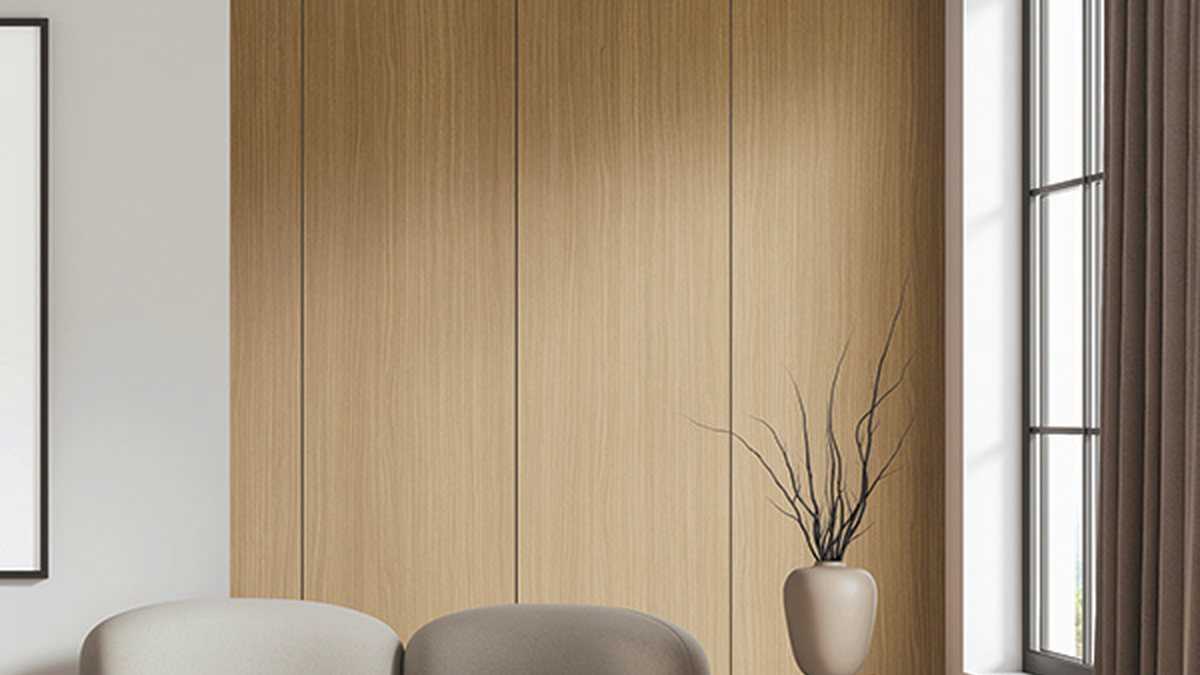
Self-adhesive film is a thin, flexible decorative covering film with a self-adhesive layer on its back. It is applied without any renovation to almost any flat surface — from kitchen cabinets to doors, from furniture to countertops — completely transforming the look by wrapping over the old surface. In short, self-adhesive film is the fastest and most affordable way to renew surfaces without tearing them out and starting over.
In this article we take an expert look at what self-adhesive film is, what types there are, where it is used and why it is increasingly the go-to choice.
What is self-adhesive film made of?
A quality covering film is usually made up of three layers:
- Decorative surface layer (PVC): The scratch- and wear-resistant top layer onto which the wood, marble, stone or solid-color pattern is printed.
- Adhesive layer: A pressure-sensitive (self-adhesive) acrylic glue. It grows stronger the more you press it onto the surface and allows repositioning in the first few hours.
- Protective backing paper (liner): A peel-off sheet with a millimeter grid that protects the adhesive until the moment of application. It makes cutting straight and aligning easier.
Homecc films are produced in rolls 120 cm wide; this width usually makes it possible to cover standard surfaces such as cabinet doors, door leaves and countertops in a single, seamless piece.
Types of self-adhesive film
Pattern and texture determine the feel the film will give once applied. The most popular categories are:
Wood-pattern film
It mimics the grain and matte texture of natural wood such as oak, walnut and anthracite wood down to the last detail. It is the most widely used group for kitchen cabinets, doors and furniture.
Marble- and stone-pattern film
With its marble, travertine and concrete looks, it adds a touch of luxury to countertops, coffee tables and walls. It delivers the same aesthetic without the weight and cost of real stone.
Solid-color and matte film
Super-matte black, white, gray and earthy tones are essentials of minimalist, modern design. Matte surfaces that do not show fingerprints are especially popular.
Metallic and special-texture films
Options such as brushed metal, rose gold and leather texture create character for display cases, accessories and accent surfaces.
Choosing the right film is about texture, not just color. A matte surface softens the light and hides scratches, while a glossy surface makes a space feel more open.
Where is self-adhesive film used?
Any surface that is clean, dry and relatively smooth can be covered with film. The most common uses are:
- Kitchen cabinets: Renewing the doors and carcasses gives the kitchen a brand-new look.
- Doors and cabinets: Interior doors, wardrobes and built-in cabinets are transformed in a few hours.
- Furniture: Coffee table, nightstand, TV unit and desk surfaces.
- Countertops and shelves: Renewing a kitchen/bathroom countertop with a marble or wood texture.
- Walls and niches: Accent walls and decorative panels.
- Appliances and interior surfaces: Commercial surfaces such as refrigerators, elevator doors and reception counters.
In commercial spaces such as hotels, stores, offices and restaurants, film is preferred because it delivers a fast makeover without closing the business.
The advantages of self-adhesive film
- Affordable: A makeover for a small fraction of the cost of new furniture or a new kitchen.
- Fast: A cabinet door can be wrapped in minutes, and an entire kitchen in a day.
- No renovation: No dust, rubble or noise; it can be applied while you are living in the home.
- Reversible: Quality film can be warmed with heat and peeled off, leaving no residue on most surfaces — ideal for renters.
- Durable: It stands up to water, moisture, heat and everyday scratches, and has a wipeable surface.
Is self-adhesive film permanent, and how long does it last?
A quality covering film that is applied correctly will serve indoors for 7–10 years on average without a hitch. The surface can be wiped with a damp cloth, withstands mild detergent and, thanks to a UV additive, does not fade easily. In areas in constant contact with water (such as around the sink), sealing the edges well directly extends its life. For maintenance, simply avoiding solvents and abrasive cleaners is enough.
Frequently asked questions
Are self-adhesive film and covering film the same thing?
Yes. “Self-adhesive film”, “covering film” and “decorative covering film” all describe the same product: a decorative film with a self-adhesive back, used to renew surfaces.
Does film stick to every surface?
It can be applied to any surface that is clean, dry, grease-free and relatively flat: melamine, chipboard, MDF, glass, metal, painted surfaces and tile. Very rough or dusty surfaces must be prepared first.
Does film damage the surface when it is removed?
Quality film is removed with heat and usually leaves no residue. On sound melamine and painted surfaces it leaves no trace; on very old or blistered surfaces there may be minor marks.
Can I apply the film myself?
Yes. For simple surfaces, a spatula, a utility knife and a little patience are enough. For a step-by-step walkthrough, take a look at our Application Guide page.
In summary
Self-adhesive film is a fast, affordable, renovation-free surface transformation technology. If you want to renew your kitchen, doors or furniture in hours rather than days, it is the right place to start. You can browse the Homecc film collection for hundreds of patterns from wood to marble, and get in touch with us whenever you are unsure.